


Warped Siding in Summer? Heat, Windows & Installation Mistakes GTA Homeowners Miss
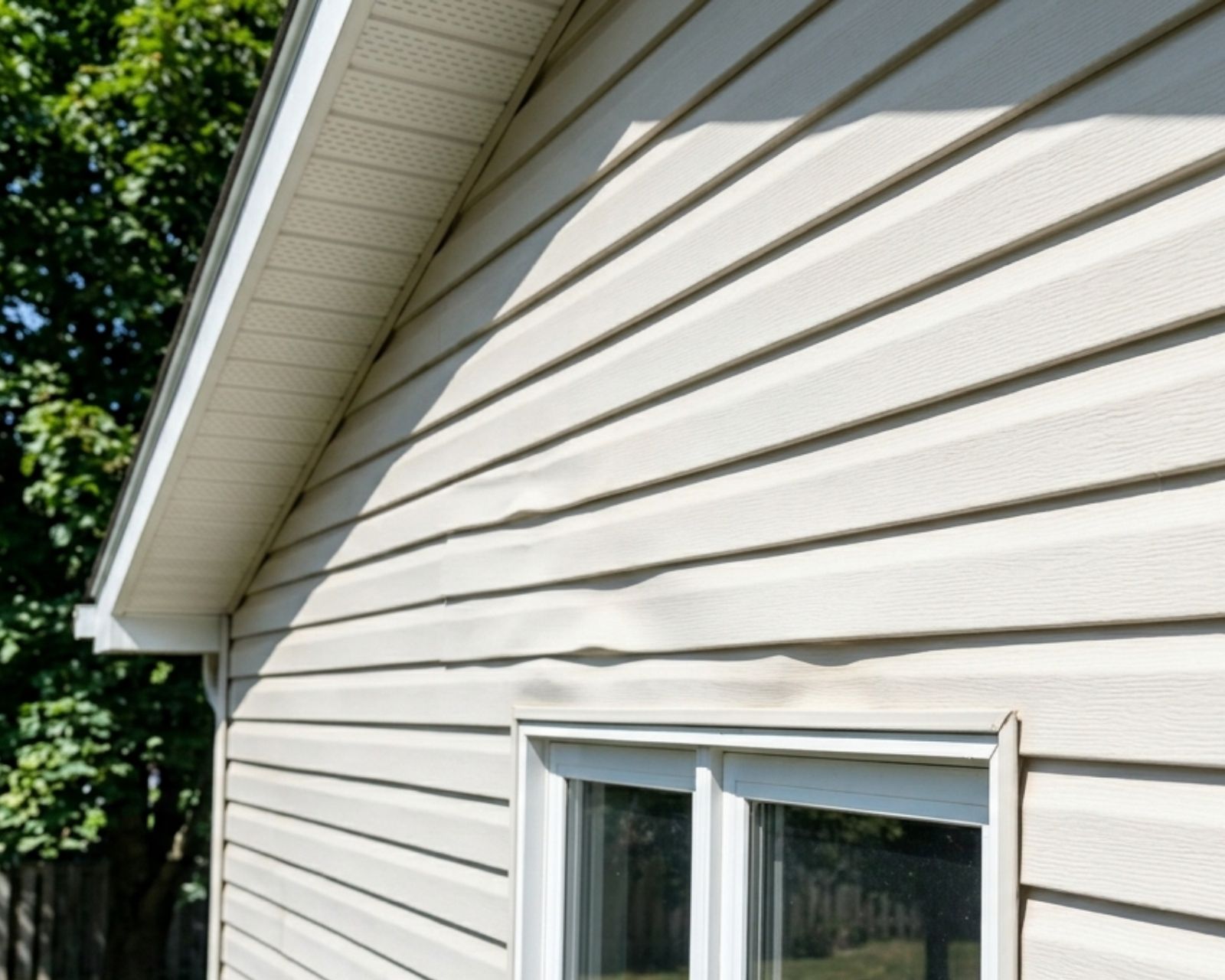
If you live in Mississauga, Brampton, Oakville, Etobicoke, Milton, Burlington, Vaughan, North York, Caledon, Georgetown or nearby West GTA areas, this is a summer problem worth taking seriously.
The real question is not just “Can this panel be replaced?” It is: why did the siding warp in the first place?
If the cause is still there, the same damage can come back.
This guide explains the most common reasons siding warps in summer, how to tell heat damage from water damage, whether foam-backed or insulated siding can help, and what photos to send before booking a siding repair assessment.
Quick navigation
- Short answer: what usually causes warped siding?
- Why this shows up in GTA summers
- What warped siding looks like
- Cause #1: siding installed too tight
- Cause #2: Low-E window reflection
- Cause #3: BBQs, AC units, asphalt and trapped heat
- Cause #4: trim, soffit and fascia details
- Can insulated or foam-backed siding help?
- Heat damage vs water damage
- Can warped siding be repaired?
- The 4-photo homeowner checklist
- FAQ
Short answer: what usually causes warped siding?
Warped siding usually comes from one of four causes:
- Heat distortion: the siding gets hot enough to soften, ripple or deform.
- Restricted movement: the siding was fastened too tightly or trapped in trim, so it cannot expand and contract.
- Reflected sunlight: concentrated sunlight from Low-E or double-pane windows heats one small area.
- Water or wall damage behind the siding: the panel looks warped because the surface behind it is no longer flat or dry.
A proper repair starts with diagnosis. Replacing a damaged panel without fixing the cause can look good for a few months, then fail again during the next heat wave.
Why this shows up in GTA summers
Summer is when exterior materials move the most.
Vinyl and other polymeric siding products expand and contract with temperature changes.
On a normal wall, that movement is expected. It becomes a problem when the siding is nailed too tight, trapped at the ends, overheated by reflection, or installed over a wall that is not flat.
Local heat also matters.
Peel Region issues heat warnings when daytime temperatures are expected to reach 31°C or higher with warm overnight temperatures, or when humidex values are expected to reach 40°C or higher.
Mississauga also identifies extreme heat as a local weather risk and notes that the city has experienced some of the hottest summers on record.
Your siding sits outside through all of it: direct sun, reflected light, hot driveways, BBQ heat, AC exhaust, warm brick, tight side yards and humid air.
That is why one wall can look perfect in April and start showing waves by July.
What warped siding actually looks like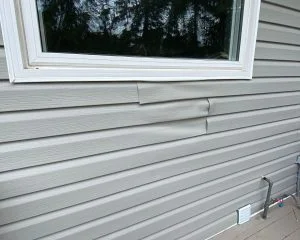
Homeowners usually describe the problem in one of these ways:
- “The siding looks wavy.” Long horizontal panels ripple instead of sitting flat.
- “One patch looks melted.” A small area looks softened, shiny, sagged or distorted.
- “A panel popped out.” One section has unlocked from the course below.
- “The siding is buckled near a window or corner.” Damage is concentrated around trim, J-channel, or a corner post.
- “Only one side of the house is affected.” Often the sunny side, driveway side, neighbour-window side, BBQ side or patio side.
That last point is important.
If only one patch or one wall is damaged, the cause is often local — not a full-house siding failure.
Cause #1: siding installed too tight
Vinyl siding is not supposed to be locked tightly to the wall.
It should hang securely while still being able to move side-to-side as temperatures change.
The Vinyl Siding Institute installation manual explains that installed panels and accessories must move freely from side to side.
It also says fasteners should be placed in the centre of the nailing slots, fastener heads should not be driven tightly against the nail hem, and clearance should be left at openings and stops for expansion and contraction.
In plain English:
if siding cannot move, it can buckle.
Common installation mistakes include:
- Nails or screws driven too tight
- Fasteners placed at the end of the slot instead of the centre
- Panels cut too long inside J-channel or corner posts
- No expansion room around windows, doors, light blocks or vents
- Face-nailing through the panel where it should be floating
- Caulking areas that were supposed to allow movement
When the wall heats up, the panel tries to expand.
If it has nowhere to go, the middle of the panel may bow outward.
That is when you see “waves” or buckling.
If you suspect tight fastening or poor installation, start here:
Siding Installation & Repair.
Cause #2: Low-E window reflection
This is the one that surprises homeowners most.
Sometimes the siding damage is not caused by direct sun hitting the wall.
It is caused by sunlight reflecting off a nearby window and concentrating heat on one patch of siding.
The Polymeric Exterior Products Association explains that concentrated sunlight reflecting off certain surfaces — including energy-efficient windows — can create enough heat to melt polymeric siding surfaces.
This can affect vinyl siding, insulated vinyl siding, backed vinyl siding and polypropylene siding.
NAHB’s technical paper on reflected sunlight from double-paned Low-E windows notes that heat at the point of focus has been measured above 200°F, which is enough to soften and distort normal-grade vinyl siding.
It also explains that the problem usually depends on a combination of conditions, such as window angle, glass deflection, distance, sun angle, wind, air temperature and whether trees or screens diffuse the reflection.
Signs window reflection may be the cause
- The damage is localized, like a patch, oval or diagonal area.
- The damaged patch lines up with a neighbour’s window or your own window reflection.
- The problem is worse on sunny afternoons.
- The siding looks softened or melted, not just loose.
- A replaced panel warped again in the same location.
If reflected sunlight is the cause, simply replacing the siding may not be a permanent solution.
NAHB notes that mitigation can include exterior screens, awnings, landscaping or other barriers that block or diffuse the reflected beam.
We can help with the siding repair side, but if the reflection comes from a neighbour’s window, the long-term solution may require cooperation and careful planning.
Cause #3: BBQs, AC units, asphalt and trapped heat
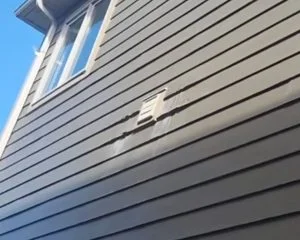
Not every heat distortion problem comes from windows.
A technical bulletin from Cardinal Glass lists multiple factors that can contribute to vinyl siding distortion, including siding colour, ambient temperature, wind exposure, architectural areas that trap heat, nearby heat sources, and reflections from materials such as asphalt, concrete, windows, doors, shingles, nearby walls and pools.
In real homeowner terms, check for:
- BBQs too close to the wall: repeated heat can soften siding or trim.
- AC condenser exhaust: hot air blowing into a tight side yard or corner can add stress.
- Black asphalt driveways: dark surfaces absorb and radiate heat toward lower siding.
- Concrete patios: bright hard surfaces can reflect heat and light.
- Dark siding colours: darker colours absorb more solar heat than lighter colours.
- Alcoves and inside corners: poor airflow can let heat build up.
The clue is usually location.
If the damage is beside a grill, driveway, AC unit, patio corner or narrow side yard, look at heat exposure before blaming the whole siding system.
Cause #4: poor trim, soffit or fascia transitions
Siding problems often start where siding meets another material:
windows, doors, corner posts, J-channel, soffit, fascia, aluminum capping, roof edges or eavestrough details.
A siding panel needs a clean place to expand into.
If the receiving channel is too tight, bent, loose, blocked or nailed through, the panel can bind.
Once the panel binds, summer heat can make it buckle.
Areas to inspect:
- Siding tucked too tightly under soffit
- Loose or bent J-channel around windows
- Trim pieces trapping the panel ends
- Damaged fascia or aluminum capping above the wall
- Old repairs where panels were face-nailed
- Water-damaged backing that no longer provides a flat surface
This is where siding, soffit and fascia work together.
A good repair is not always “swap one panel.”
The trim and edge details need to let siding move while still keeping the wall clean and protected.
Can insulated or foam-backed siding help?
Yes — but only for the right problem.
Insulated vinyl siding has rigid foam insulation permanently attached to the panel.
Backed vinyl siding is similar, but the foam backing may not provide an R-value.
PEPA describes insulated vinyl siding as a form of continuous insulation that can help improve the wall’s overall R-value and reduce thermal bridging.
From a repair standpoint, foam-backed or insulated siding can sometimes help with:
- Flatter appearance: the backing can support the panel and reduce the hollow look.
- Minor wall unevenness: some products can help panels look more consistent over a slightly imperfect wall.
- Impact resistance: a supported panel may feel more solid than hollow-backed siding.
- Energy performance: insulated siding can add exterior continuous insulation, depending on the product.
But foam backing is not a magic fix.
It will not solve tight nailing, trapped trim, poor clearances, a bad heat source or a focused Low-E window reflection.
PEPA’s solar-reflection guidance specifically includes insulated vinyl siding and backed vinyl siding among polymeric siding products that can be damaged by concentrated reflected sunlight.
Also, if siding is installed over foam plastic insulating sheathing, the wall assembly and fasteners must be selected correctly.
A continuous-insulation installation guide for vinyl siding over foam plastic insulating sheathing explains that the siding must be specified and installed to resist design wind load pressures, and that fasteners must be long enough to accommodate the foam thickness while maintaining required embedment.
For a full breakdown of vinyl siding types, costs and what to expect from installation across the GTA, see our
2026 Vinyl Siding Guide: Costs, Benefits & Installation.
So the practical answer is:
insulated or foam-backed siding can help appearance and performance, but it should not be sold as the cure for every warped siding problem.
First identify the cause. Then choose the right repair.
Heat damage vs water damage: how to tell the difference
Warped siding in summer is often heat-related, but not always.
Sometimes siding looks distorted because water has damaged the surface behind it.
| Clue | Heat distortion usually looks like | Water damage usually looks like |
|---|---|---|
| Shape | Localized ripple, softened patch, diagonal distortion or “melted” area | Stains, swelling, rot or damage spreading from seams and edges |
| Location | Sunny wall, window reflection path, BBQ, driveway, AC unit or tight side yard | Below gutters, roof edges, windows, corners, bad flashing or downspout splash zones |
| Timing | More noticeable during hot sunny weather | More noticeable after rain, snow melt or repeated wetting |
| Panel feel | Panel may be permanently deformed, but the wall behind may be dry | Wall may feel soft, damp, loose or stained |
| Common fix | Correct heat/movement issue, then replace or reset panel | Stop water entry, repair backing/trim, then replace siding |
If you see white stains on brick, dark streaks below eavestroughs, or wet marks after rain, the issue may be water-related instead.
Read this related guide:
Brick Stains from Gutters: Causes & Fixes.
If water appears to run behind the gutter or fascia before reaching the siding, this guide may help:
Roof Drip Edge for Gutters: Why It Matters.
Can warped siding be repaired?
Sometimes yes. Sometimes the panel needs replacement.
The right repair depends on whether the siding is simply loose, trapped, or permanently deformed.
Option 1: Reset a loose panel
If the panel popped loose but did not permanently warp, it may be possible to unlock it, correct the issue and snap it back into place.
This is usually the smallest repair.
Option 2: Replace the damaged panel
If the panel is melted, bent or permanently rippled, replacement is usually the cleanest option.
The challenge is colour matching.
Older siding fades over time, so a new panel may not match perfectly, especially on sun-facing walls.
Option 3: Fix the cause before replacing the panel
This is the part many quick repairs skip.
If the siding was nailed too tight, the fastening must be corrected.
If the panel is trapped in trim, the trim needs adjustment.
If reflected sunlight caused the damage, the heat source needs to be reduced or blocked.
If the backing is water damaged, the wall must be repaired before new siding goes on.
Not sure whether repair or full replacement makes more sense for your home?
Our 2026 Vinyl Siding Cost & Installation Guide for GTA Homeowners covers what to expect in either direction.
For most homeowners, the best first step is a photo-based assessment:
send us a few photos and ask for a practical recommendation.
What Maxima checks during a siding repair assessment
When we look at warped siding, we are not only looking at the damaged panel.
We are trying to find the reason it failed.
- Panel movement: can the siding slide side-to-side, or is it locked tight?
- Fasteners: are nails/screws too tight, crooked, face-nailed or off-centre?
- Trim clearance: is there enough room inside J-channel, corners and receiving trim?
- Heat source: is there a window reflection, BBQ, AC exhaust, dark driveway or tight side yard?
- Backing condition: is the wall flat and dry behind the panel?
- Soffit/fascia transition: is the upper edge clean, secure and not trapping the siding?
- Water clues: are there stains, soft wood, drip marks or gutter issues nearby?
If the issue is connected to gutters, downspouts or roof-edge drainage, we can also review:
Eavestrough (Gutter) Installation & Repair
and
Downspout Installation & Repair.
The 4-photo homeowner checklist
Before calling anyone, take four quick photos.
These help us understand the problem faster and often save time during the first conversation.
- Photo 1: close-up of the warped, buckled or melted siding.
- Photo 2: wide shot of the full wall from ground to roofline.
- Photo 3: nearby windows, neighbour windows, BBQ, AC unit, driveway or patio area.
- Photo 4: soffit, fascia, gutter and trim above the damaged area.
A short video helps too.
Walk slowly from left to right and show the whole wall.
If the panel moves, rattles or pops, include that in the video.
How to reduce the chance of warped siding in summer
You cannot control every heat wave, but you can reduce the common risks.
- Keep BBQs and heat sources away from siding.
- Do not aim AC exhaust into tight siding corners.
- Watch for focused window reflections on hot sunny days.
- Use screens, awnings, shade or landscaping where reflection is a known issue.
- Do not face-nail loose siding as a quick fix.
- Make sure replacement panels have room to expand and contract.
- Repair loose soffit, fascia, capping or trim before it traps siding edges.
- Fix water problems before replacing panels that look swollen or stained.
- Consider insulated or backed siding when appearance, rigidity or energy performance is part of the goal — but do not rely on it alone to solve heat reflection.
If your siding is older and you are weighing repair against full replacement, see:
Siding Installation & Repair in Mississauga & the GTA
and our
2026 Vinyl Siding Guide: Costs, Benefits & Installation.
FAQ: warped siding in summer
Why does vinyl siding warp in summer?
Vinyl siding can warp when heat and movement problems combine. Common causes include tight fastening, trapped panel ends, reflected sunlight, BBQ heat, AC exhaust, dark hard surfaces and water damage behind the siding.
Can Low-E windows really melt siding?
Yes, in the right conditions. Concentrated sunlight reflected from Low-E or double-pane windows can heat a small area enough to distort siding. The damage is often localized and may repeat if the reflection is not addressed.
Does insulated siding prevent warping?
Not automatically. Insulated or foam-backed siding can improve rigidity, appearance and energy performance, but it can still be damaged by concentrated heat or reflected sunlight. It also still needs correct fastening, clearance and trim details.
Is warped siding always an installation problem?
No. Tight installation is common, but heat reflection, BBQs, AC exhaust, dark driveways, poor airflow and water damage behind the wall can also make siding deform.
Can I just replace the warped panel?
You can, but it may not last if the cause is still there. Before replacing the panel, check for tight fastening, trapped trim, reflected sunlight, heat sources and water damage.
Why is only one wall affected?
One-wall damage usually points to a local condition: afternoon sun, window reflection, a nearby BBQ, a dark driveway, a tight side yard, AC exhaust, or a trim/detail problem on that wall.
Does darker siding warp faster?
Darker colours absorb more heat than lighter colours, so they may show heat-related stress sooner in the wrong conditions. Product type, colour rating, installation quality and sun exposure all matter.
Can soffit or fascia problems make siding warp?
They can contribute. If upper trim, fascia capping or soffit details are loose, bent or installed too tight, the siding edge may bind instead of moving freely.
How do I know if it is heat damage or water damage?
Heat damage is often localized and more obvious during sunny hot weather. Water damage usually comes with stains, swelling, soft backing, rot or visible drip patterns after rain.
Do you repair small siding sections, or only full walls?
Maxima Aluminum can assess both small repairs and larger replacement work. The right choice depends on colour match, panel condition, backing condition and whether the cause has been corrected.
Need help figuring out what caused the warp?
If you are in
Mississauga,
Brampton,
Oakville,
Etobicoke,
Milton,
Burlington,
Vaughan,
North York,
Caledon,
Georgetown,
or nearby West GTA areas
,
send us the four photos listed above.
We can usually tell whether the issue looks like heat distortion, tight installation, water damage, loose trim, or a siding/soffit/fascia transition problem.
Request a Siding Repair Assessment
Call 416-677-8191
Sources and helpful references
- Polymeric Exterior Products Association: Vinyl Siding Solar Reflection
- Vinyl Siding Institute Installation Manual
- NAHB: Sunlight Reflected from Double-Paned Low-E Windows
- Cardinal Glass Technical Service Bulletin: Vinyl Siding Distortion
- PEPA: Insulated Vinyl Siding and Continuous Insulation
- Continuous Insulation Guide: Vinyl Siding over Foam Plastic Insulating Sheathing
- PEPA: Certified Exterior Cladding Products and ASTM Standards
- Peel Region: Hot Weather and Heat Warnings
- City of Mississauga: Extreme Heat
- City of Mississauga: Climate Change and Extreme Weather