


Brick Stains from Gutters: Causes & Fixes
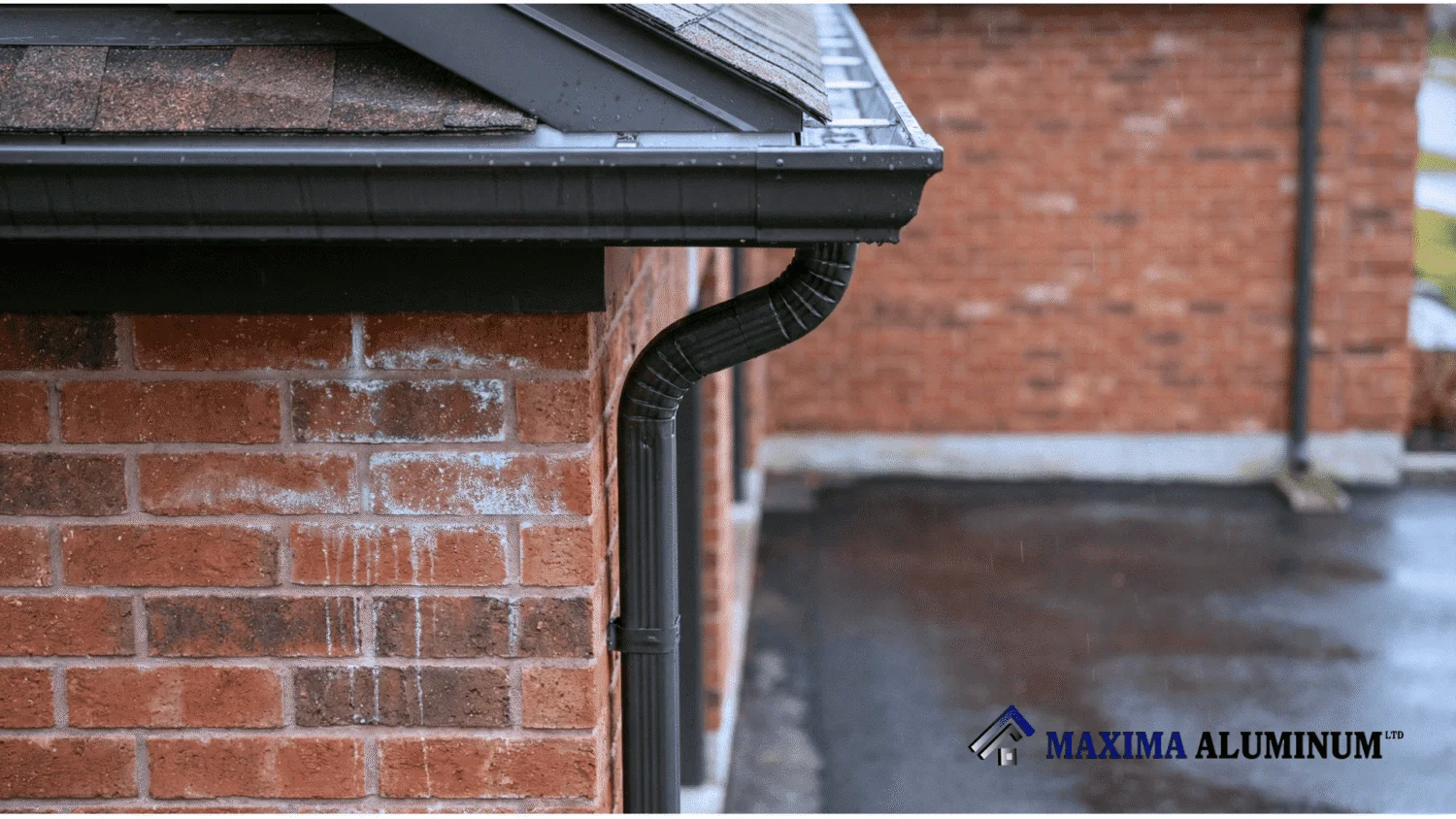
Or dark streaks running down under the eaves? In Mississauga, Oakville, Brampton, Etobicoke, Milton, Burlington, Vaughan, and North York, this is a common homeowner problem.
The surprising part is that the source is often simple: your gutters, drip edge, and downspout discharge.
In this guide we’ll show you how to identify the stain type, find the real water path, and fix it properly so stains don’t keep coming back.
Quick identification: What your brick is trying to tell you
The colour and “shape” of staining usually points to the root cause. Here’s a simple breakdown you can use during the next rainfall:
-
White powdery / chalky film:
This is often efflorescence — salts carried to the surface as moisture moves through brick and mortar. -
Dark streaks under a seam, corner, or roof edge:
Usually an overflow path — “dirty tea water” from roof debris washing down the wall. -
Green algae / mildew near the ground:
A classic splash zone — downspout discharge is too close, or drainage at grade is keeping the area wet.
The Golden Rule: You can clean the stain, but if you don’t fix the water path, it will return.
The real reasons gutters and downspouts stain your house
Brick and mortar are tough — but they aren’t designed to handle a concentrated waterfall hitting the same spot over and over.
Problems start when roof water gets misdirected during storms or repeated wetting.
1) Overflowing or “waterfalling” gutters
When an eavestrough spills over during a heavy storm, water sheets down brick and leaves mineral residue and dirt trails.
This is usually caused by:
- Improper slope (water can’t reach the downspout fast enough)
- Outlets that are too small or placed in the wrong spot
- Hidden clogs at elbows, drop outlets, or inside corners
- Windy rain that makes water “overshoot” the gutter edge
If you suspect overflow, start here:
Eavestrough (Gutter) Installation & Repair.
2) Downspouts dumping too close to the foundation (splashback)
This is one of the most common causes of staining we see.
If a downspout ends right beside the wall — or aims at a driveway or patio — water rebounds and splashes back onto the brick.
Over time the wall stays damp, leading to darker streaks, algae near the base, and “dirty bands” that don’t fade.
For better routing and repair options, see:
Downspout Installation & Repair.
3) Missing or bad drip edge (water sneaking behind fascia)
If drip edge is missing or installed incorrectly, water can run behind the gutter and fascia instead of going cleanly into the trough.
That hidden wetting can show up as staining on brick, damp soffits, and eventually fascia damage.
We explain why this small detail matters here:
Roof Drip Edge for Gutters: Why It Matters.
4) Fascia & soffit problems keeping everything damp
Soft fascia, failed capping, or persistent wetting at the roof edge keeps surfaces damp longer than they should be.
That moisture cycle contributes to staining patterns and can accelerate wood rot at the eaves.
The “efflorescence” issue (those white salt marks)
Efflorescence is a fancy word for crystalline salt deposits.
It happens when moisture soaks into brick/mortar, dissolves salts, then evaporates on the surface leaving a white powder behind.
In Ontario, freeze-thaw and wet seasons can make it more noticeable.
If you want the technical reference (useful for tricky cases), here’s a trusted industry note:
Efflorescence – Causes and Prevention (Brick Industry Association PDF).
Key takeaway: Efflorescence is a symptom — not the disease. Stop the moisture path first, then decide if cleaning is needed.
Fix it the smart way: stop the water first
Don’t rush to power wash. Here’s the order we recommend to save money (and prevent repeat staining):
Step 1: Confirm overflow or leaks
- Look for “tide lines” on fascia or brick below seams and corners
- Check for sagging runs or standing water after rain
- During a storm, see if water sheets over the front edge
Not sure what you’re seeing?
Request an Estimate / Ask a Question.
Step 2: Fix where the downspout lands
A good discharge setup keeps water:
- Off the wall (no splashback)
- Off walkways (less ice risk in winter)
- Away from the foundation (dryer basements)
If you use a rain barrel or diverter, this may help:
Downspout Diverter / Splitter – When & How to Use It.
Step 3: Check drip edge & roof-edge details
The goal is simple: water should go into the gutter — not behind it.
If the roof edge is wrong, stains can show up even with “clean” gutters.
Step 4: Consider upgrades only if needed
If your gutters are sloped correctly but trees overload the system, a guard may reduce clog-related overflow.
Learn more here:
Gutter Guards Installation.
Should you clean the stains?
Good news: once water flow is corrected, many stains fade naturally over time.
If you choose to clean, be careful — aggressive pressure washing and harsh chemicals can damage mortar or drive water deeper into brick, making the problem worse.
Rule of thumb: Fix drainage first. Then use the gentlest cleaning method that works.
The 10-minute homeowner inspection
Take a quick walk around your home and check these:
- Streaks below a gutter seam or corner
- Sagging runs or standing water
- Downspout outlet too close to the wall
- Discharge aimed at driveway/walkway (splashback)
- Wet “bands” on brick long after rain stops
- Peeling paint or soft wood at the roof edge
- Visible drip edge (or signs it’s missing)
If you spot 2–3 of these, it’s usually worth fixing before winter makes the cycle worse.
FAQ: Brick staining & gutters
Is efflorescence dangerous to my house?
Usually it’s cosmetic, but it indicates moisture movement. Over years, repeated wetting can weaken mortar and increase deterioration at the roof edge.
Why is the staining only on one wall?
That wall may take more roof runoff, face wind-driven rain, or have a single downspout causing a splash zone.
My gutters are clean, so why do I still see streaks?
Clean doesn’t always mean functional. Wrong slope, undersized outlets, missing drip edge, or discharge too close to the wall can still cause staining.
Will gutter guards stop the staining?
They can reduce clog-related overflow, but they won’t fix slope, drip edge issues, or poor downspout routing.
Can this be fixed without replacing the full system?
Often yes. Targeted repairs like re-sloping, sealing seams, adding/relocating outlets, or extending a downspout solve most staining problems.
Need help diagnosing the cause?
If you’re in Mississauga, Oakville, Brampton, Etobicoke, Milton, Burlington, Vaughan, or North York,
send us a couple photos of the stained area and your downspout discharge point. We can usually tell you what’s causing it and the most practical fix.
Request a Free Gutter & Downspout Assessment
Call 416-677-8191
Related reading:
Mississauga Downspout Disconnection Program.