


Signs Your Gutters Need Replacing Instead of Repairing
Quick answer: repeated leaks, distorted runs and damage in several areas can be signs your gutters need replacing. However, overflow, sagging or water near the foundation can also have repairable causes. Check the outlets, downspouts, fastening and fascia before deciding. A small isolated defect rarely justifies replacing the whole system.
For homeowners in Mississauga and the West GTA, the first question is whether a repair will address the cause of the problem. This guide covers ten reasons to inspect your gutters, what may be repairable and when replacement is worth discussing.
Maxima Aluminum LTD has served the West GTA since 2002. Learn about our team and credentials or view our exterior projects.
550+ public customer reviews and ratings, including 420+ HomeStars reviews and 148+ Google reviews as of October 2026This guide explains the clearest signs your gutters need replacing, when a repair still makes sense, and how to plan the right eavestrough upgrade for a West GTA home.
Need a fast budget number? Use our Eavestrough Cost Calculator™ to estimate 5-inch, 6-inch, downspout, and Alu-Rex gutter guard options before booking a site visit.
Gutter Repair vs. Replacement: What to Check
Repair is usually enough when the problem is small, local, and the rest of the system is straight, secure, and properly sloped.
Replacement is usually better when the problem affects several areas, keeps coming back, or shows that the gutter system is undersized, poorly pitched, loose, damaged, or near the end of its useful life.
The table below gives a quick way to compare common repairs with stronger signs your gutters need replacing.
| Problem | Repair may work | Compare replacement when |
|---|---|---|
| Small leak | One corner or seam needs resealing | Multiple seams leak or old sealant keeps failing |
| Overflow | Caused by a clog or blocked downspout | The existing gutter capacity cannot meet the roof runoff needs |
| Sagging | One loose hanger can be re-secured | Runs are distorted or damaged beyond a lasting repair |
| Damage | One short section is dented or loose | Several sections are bent, crushed, cracked, or detached |
| Repeated repairs | Sound system with isolated damage | Several defects remain after their underlying causes are assessed |
1. Your Gutters Overflow Even After Cleaning
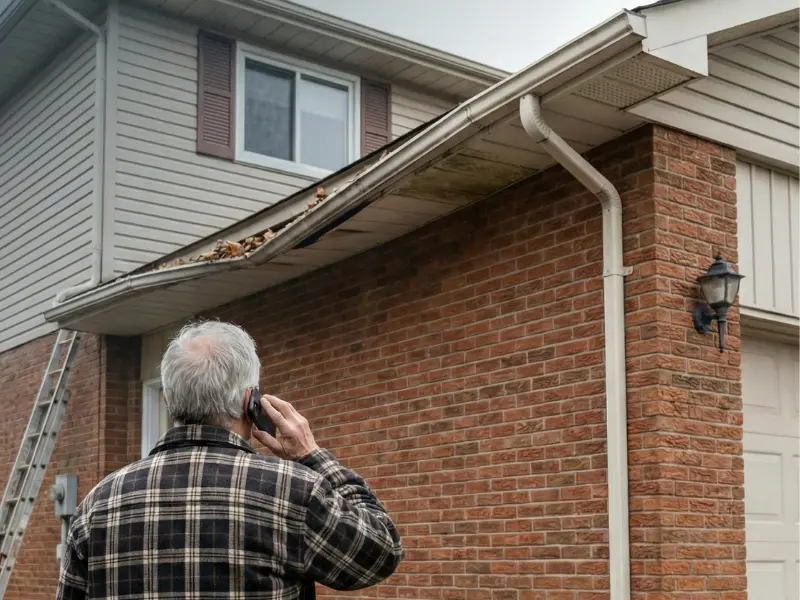
Overflow is one of the most common signs homeowners notice first. If water spills over the front edge during rain, the cause may be a clog, blocked outlet, or undersized downspout. In that case, cleaning or a downspout repair may solve it.
But if the eavestroughs overflow after they have already been cleaned, the issue may be system design. The gutters may be too small for the roof area, the slope may be wrong, there may be too few downspouts, or the roof valleys may be dumping too much water into one short section.
Overflow after cleaning needs a closer inspection. Correcting the slope, adding an outlet or changing a downspout may resolve it without replacing every gutter. If the existing troughs cannot handle the roof runoff, compare 5-inch and 6-inch systems as part of a complete drainage layout.
2. Sections Are Sagging, Dipping, or Pulling Away
A slightly loose hanger can sometimes be repaired. But visible sagging along a run is usually a warning sign. Eavestroughs sag when fasteners fail, fascia weakens, water sits inside the trough, or the system has been carrying too much debris, snow, and ice for too long.
Sagging can leave water in low spots. The cause may be loose fasteners, damaged fascia or a distorted gutter. Check the supporting wood and the condition of the run before deciding whether to rehang or replace it.
Look for these warning signs:
- The gutter line is no longer straight.
- One section dips lower than the rest.
- Fasteners or spikes are pulling out.
- There is a gap between the gutter and fascia board.
- Water remains in the trough after rain stops.
A sound gutter can sometimes be rehung after its supports are repaired. Replacement becomes more relevant when the run is twisted, cracked or too damaged to hold the correct slope.
3. Water Is Collecting Near Your Foundation
The purpose of an eavestrough and downspout system is to move water away from the house. If water is pooling beside the foundation, splashing back onto walls, soaking walkways, or collecting near basement windows, the system is not protecting the home properly.
Sometimes this is a downspout issue: the extension may be too short, the elbow may be clogged, or the discharge point may need to be moved. But if the gutters are overflowing, leaking at multiple points, or sloped incorrectly, replacement may be needed to fix the full drainage path.
Pooling near the foundation also needs a check of grading, discharge locations and other possible water sources. Gutter replacement alone may not solve it. Start by tracing where the water comes from during rain, from a safe position on the ground.
4. You Have Repeated Leaks at Seams, Corners, or End Caps
A single leaking corner can often be cleaned, resealed, and reinforced. But repeated leaks are different. If several seams, miters, or end caps are failing, the system may be old, poorly installed, poorly sloped, or stressed by movement.
If the same corner keeps leaking, check movement, slope and joint preparation before applying more sealant. Several failing joints may make replacement worth comparing with the cost of a lasting repair.
Seamless aluminum eavestroughs reduce this issue because long straight runs are formed on site, with joints mainly at corners and ends. Fewer joints means fewer leak points.
5. The Fascia Board Is Rotting or Stained
Fascia damage is a strong sign that the gutter problem has been active for a while. Water stains, peeling paint, soft wood, dark streaks, or visible rot behind the gutter line can mean water has been overflowing or leaking behind the system.
If the fascia is solid, correcting the leak may be enough. Rotten wood needs repair or replacement before aluminum capping covers it. Gutters may need to come down for access, but sound runs may be reusable afterward.
This is where eavestrough work often connects with fascia services, soffit installation, and aluminum cladding. A new eavestrough installed over damaged wood will not stay secure for long.
6. The Gutter Slope Is Wrong
Gutters need a controlled slope so water moves toward the outlets and downspouts. If the slope is wrong, water may sit in the trough, spill over the wrong side, or freeze in winter.
Warning signs include:
- Standing water remains after rainfall.
- Water runs away from the downspout instead of toward it.
- One side overflows while another side stays dry.
- Ice builds up in low spots during winter.
A sound run may be re-pitched. Distorted or cracked gutters may need replacement, while failed supports require repair regardless of whether the trough stays.
7. The Gutters Are Undersized for the Roof
Some homes simply ask too much from the original gutter system. Large roof planes, long valleys, steep roof sections, and too few downspouts can overwhelm a basic setup.
Common signs of undersizing include:
- Overflow only during heavy rain.
- Overflow below roof valleys.
- Water shooting over the front lip.
- Large roof areas draining into one downspout.
- Recurring basement or foundation moisture after storms.
Undersizing is one of the hidden signs your gutters need replacing because the system can look fine on a dry day but fail during heavy rain. In these cases, sealing a corner will not solve the main problem. The better fix may be 6-inch eavestroughs, larger 3×4 downspouts, extra outlets, better discharge locations, or an improved gutter layout.
8. Your Gutters Are Bent, Crushed, Cracked, or Badly Dented
Physical damage can happen from falling branches, ladders, ice, wind, animals, or previous repair attempts. A small dent may not matter if water still flows correctly. But crushed sections, cracked corners, and twisted runs can break the slope and trap water.
If the damage is limited to one short section, a partial replacement may be possible. If the system has multiple damaged areas or the profile is no longer available, a full replacement is usually cleaner and more reliable.
9. You Are Repairing the Same Problem Every Year
Repeated repairs deserve a review of the original cause. Compare the scope and expected usefulness of another repair with replacement. Routine cleaning is maintenance, not evidence that a gutter has reached the end of its life.
A repair should address the defect. If the same leak or sag returns, ask what caused the earlier repair to fail before approving more work.
When a system keeps failing, ask:
- Is the gutter too small?
- Are there enough downspouts?
- Is the fascia strong enough?
- Is the slope correct?
- Are tree debris and roof grit constantly clogging the outlets?
- Would Alu-Rex gutter guards reduce the cause of the problem?
10. You Are Already Replacing Soffit, Fascia, Siding, or Roofing Edges
Coordinating gutter work with soffit, fascia or siding can make access and colour selection easier. However, another exterior project is not itself a sign that sound gutters need replacing. Ask which components can remain or be reused.
For example, if fascia boards are being wrapped or replaced, reinstalling old, weak gutters over new fascia may not make sense. A coordinated exterior update can reduce duplicated setup, staging, disposal, and colour-matching work compared with separate projects.
When a Gutter Repair Still Makes Sense
Replacement is not always necessary. Repair may be the right choice when:
- The surrounding gutters are in sound condition.
- Only one corner or short section is leaking.
- The gutter line is straight and secure.
- The slope is still correct.
- There is no fascia rot.
- The issue was caused by a clog, not system failure.
- Matching materials are available.
For small leaks, clogs, and seasonal inspection guidance, visit our eavestrough service page.
When to Compare a Replacement Quote
Ask for a replacement quote when several runs are badly damaged, the layout cannot carry the roof runoff, or a lasting repair would require extensive removal and rebuilding. Compare the written scope, materials, disposal and applicable warranty terms with the repair option.
Should You Upgrade to 6-Inch Gutters?
Many homes still perform well with 5-inch eavestroughs. But 6-inch gutters are often a better choice when the home has large roof areas, steep roof planes, long runs, complex valleys, heavy rainfall overflow, or a history of water spilling over the front edge.
For replacement projects, this is one of the most important decisions. If your current 5-inch system is failing because it cannot handle the roof volume, replacing it with another 5-inch system may repeat the same problem.
Use our Eavestrough Cost Calculator™ to compare a typical 5-inch system, a 6-inch system, downspout options, and Alu-Rex gutter guard upgrades.
Should You Add Gutter Guards During Replacement?
If clogs are part of the problem, gutter guards may be worth considering during replacement. As an Alu-Rex Elite Installer, Maxima Aluminum installs Alu-Rex options for new and existing gutters:
- Alu-Rex T-Rex Continuous-Hanger — perforated aluminum with structural reinforcement; a strong option for homes where ice load, wind, and long-term support are concerns.
- Alu-Rex DoublePro — two layers of perforated aluminum, installed with new gutters to help keep debris out.
- Alu-Rex Gutter Clean System — low-profile retrofit for existing eavestroughs in good condition.
Alu-Rex systems include manufacturer material warranty coverage where applicable. As an Alu-Rex Elite Installer, Maxima Aluminum provides direct product and warranty support for installed systems.
Gutter guards can reduce leaf, maple key, pine needle, and shingle grit buildup. They are especially useful for mature-tree areas in Mississauga, Oakville, Burlington, Etobicoke, North York, and Georgetown.
They do not remove the need for every seasonal check, and they do not solve attic-related ice dams, but they can reduce clog-related overflow and maintenance.
Learn more on our gutter guards service page.
Repair or Replace Checklist
From the ground, note these problems before requesting an estimate:
- Do the gutters overflow after cleaning?
- Are they sagging or pulling away?
- Is water pooling near the foundation?
- Are multiple seams or corners leaking?
- Is the fascia stained, soft, or rotten?
- Does water sit in the gutter after rain?
- Are the downspouts too small or poorly placed?
- Do you keep fixing the same problem?
- Are you already planning soffit, fascia, siding, or cladding work?
These observations help explain the problem to an installer. The number of boxes checked does not decide whether you need replacement.
Cost Planning: Repair vs Replacement
Small repairs can be the right choice when the system is otherwise sound. But when repairs become repeated, the cost can add up quickly without improving the system’s capacity, slope, or drainage layout.
For replacement budgeting, use the Eavestrough Cost Calculator™. It estimates price ranges based on roofline footage, corners, downspouts by storey, removal, and Alu-Rex guard options.
The calculator page lists our planning ranges for full-home projects, before HST. Small repairs and partial replacements need a separate quote and are subject to the stated minimum service charge. Compare the same footage, downspouts and removal scope when reviewing estimates.
A calculator estimate is a planning number. A firm price still requires an on-site inspection to confirm measurements, access, fascia condition, downspout placement, and any required repairs.
Gutter Assessments in Mississauga and the West GTA
Roof design, tree cover, access and the condition of the existing system matter more than the neighbourhood name. We serve Mississauga and the surrounding West GTA service areas.
Get a Professional Repair-or-Replace Assessment
If you are not sure whether your gutters need repair or replacement, Maxima Aluminum can inspect the full system and explain the options clearly. We look at roofline length, slope, fascia condition, downspouts, outlets, access, water discharge, and whether Alu-Rex gutter guards or a 6-inch upgrade would solve the real problem.
Maxima Aluminum is a local Mississauga-based exterior contractor serving Mississauga, Oakville, Brampton, Milton, Burlington, Georgetown, Vaughan, Etobicoke, North York, and Caledon.
An on-site assessment can confirm the cause and whether a repair will address it.
Call 416-677-8191 for Mississauga, Oakville, Milton, Burlington, and Georgetown.
Call 416-875-6366 for Brampton, Caledon, Vaughan, North York, and Etobicoke.
Or request a free written estimate through our contact page.
Frequently Asked Questions
Repair decisions and gutter options
How do I know if my gutters need replacing instead of repairing?
Repeated leaks, distorted runs and damage in several areas justify a repair-or-replace assessment. Overflow, loose fasteners or poor drainage may be repairable. Check the cause and condition of the system rather than deciding from age or one symptom alone.
Can leaking gutters be repaired?
Yes. Small leaks at seams, corners, or end caps can often be cleaned and resealed. If leaks return quickly or appear in several areas, the system may be old, poorly sloped, undersized, or structurally failing.
Is it worth replacing 5-inch gutters with 6-inch gutters?
It can be worth upgrading to 6-inch gutters if your home has large roof areas, long runs, steep roof planes, complex valleys, or overflow during heavy rain. A 6-inch K-style system with 3×4 high-flow downspouts can handle more water than a standard 5-inch setup.
Do gutter guards mean I do not need new gutters?
No. Gutter guards help reduce debris and clogs, but they do not fix sagging, poor slope, undersized gutters, damaged fascia, or leaking corners. Existing gutters should be inspected before gutter guards are installed.
Planning, costs and warranty
How long does gutter replacement usually take?
Most standard residential eavestrough replacement projects are completed in one working day. Larger homes, complex rooflines, fascia repairs, or Alu-Rex gutter guard upgrades may take longer. Scheduling depends on season, weather, material availability, and project complexity.
Should I repair gutters before selling a house?
Address active leaks or loose sections before they cause further damage. A sound system may only need a local repair. Ask for an assessment and keep the repair or installation paperwork for the buyer.
What kind of warranty comes with gutter replacement?
Qualifying new installations may include a 5-year workmanship warranty when stated in the written agreement. Manufacturer coverage varies by product. Repairs and partial replacements are not automatically covered. Review the warranty terms with your quote.
What is the best way to estimate gutter replacement cost?
The best first step is to use our Eavestrough Cost Calculator™ for a planning range, then book an on-site inspection for a firm quote. Measurements, access, fascia condition, downspout layout, and Alu-Rex guard options can all affect the final price.