


What Is an Eavestrough? A Guide for Ontario Homeowners
An eavestrough is the gutter along the edge of a roof. It collects rainwater and melting snow, then carries the water to downspouts. The downspouts discharge it away from the house. In Ontario, “eavestrough” and “gutter” usually mean the same part of the drainage system.
This guide explains materials, gutter profiles, 5-inch and 6-inch sizing, maintenance, and when repair or replacement makes sense. The cost section uses Maxima Aluminum’s current Mississauga and West GTA planning ranges, with a link to our replacement calculator.
Why Eavestroughs Matter in Ontario
Our weather swings between heavy summer downpours and freeze–thaw winters. In places like Mississauga, Oakville, Milton, Etobicoke, and Brampton, gutters stop water from spilling over the roofline, soaking the siding, and pooling at the foundation. A working system helps reduce water exposure around the house, although basement moisture can have other causes.
If your system overflows during rain, sags, or drips at the corners, it’s time to inspect, clean, repair—or replace. The sections below explain materials, profiles and installation choices.
Eavestrough vs Gutter — What’s the Difference?
On a residential estimate, the two words normally refer to the same thing. An eavestrough is a gutter fitted along the roof edge. A downspout is the vertical pipe that carries water from the gutter to a discharge point.
“Eavestrough” is common in Ontario; “gutter” is also widely understood. When comparing quotes, check the material, profile, size, downspouts, removal and installation details rather than relying on the name alone.
Eavestrough Materials: What to Choose (and Why)
Here’s a quick comparison of the most common options across the GTA:
| Material | Pros | Cons | Best For |
|---|---|---|---|
| Aluminum | Lightweight, won’t rust, colour-matched, great value | Can dent from impacts | Most GTA homes (our top recommendation) |
| Vinyl | Low cost, DIY-friendly | Gets brittle in winter; seams can leak | Short-term/DIY fixes |
| Steel | Very strong | Can rust if coating is damaged | High-impact areas |
| Copper | Premium look, very long life | High upfront cost | Custom/heritage homes |
We use seamless aluminum for many residential projects because it offers a practical balance of weight, corrosion resistance and colour choice. For more on thickness, see Gutter Coil Gauges.
Gutter Styles: K-Style, Half-Round, and Boxed
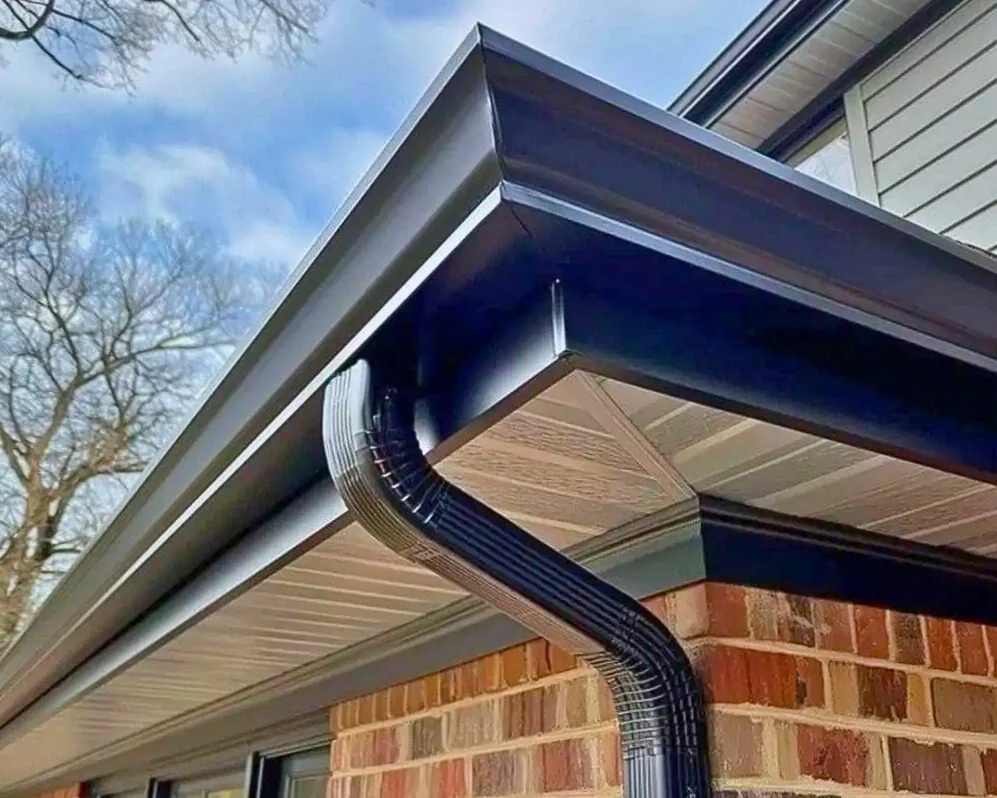
K-Style: A common residential profile with a shaped front and flat back. It suits many houses and is available in a range of colours.
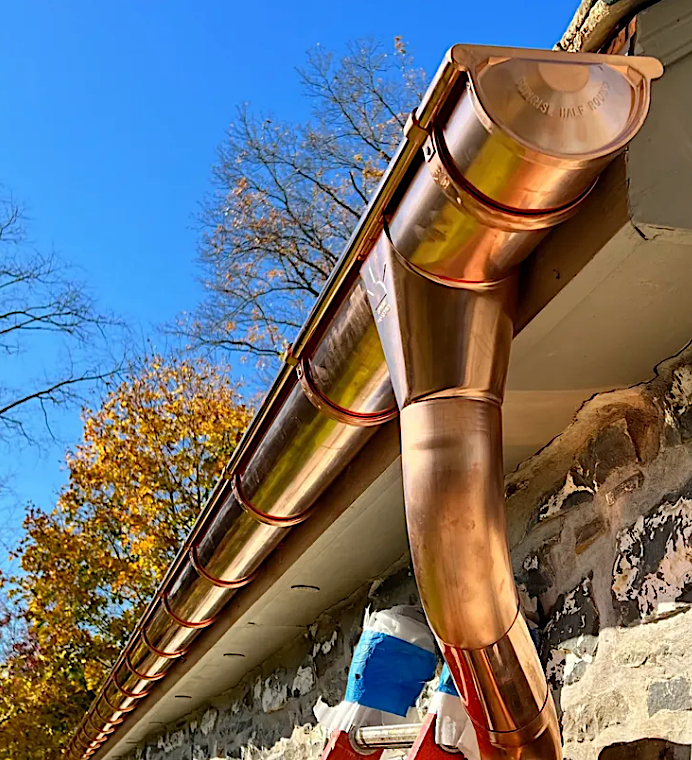
Half-Round: A rounded profile often chosen for heritage or custom homes. Check the available size, brackets and outlet arrangement when comparing it with K-style gutters.
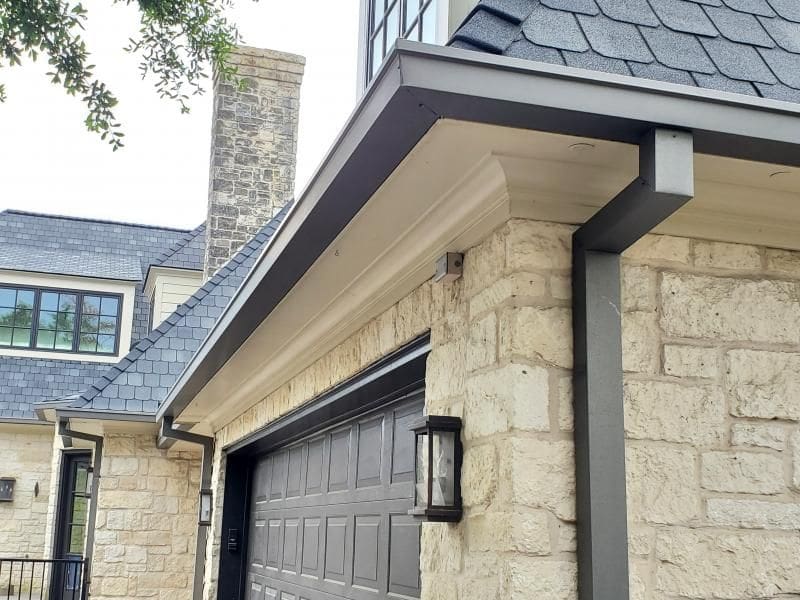
Boxed (Contemporary): A rectangular profile used on some contemporary and commercial buildings. Its drainage and installation details need to suit the roof.
5-Inch vs 6-Inch Eavestroughs — Which Do You Need?
The right size depends on how much water reaches each gutter run and how the outlets and downspouts carry it away.
| Profile | Water Capacity | Best For | Cost Premium |
|---|---|---|---|
| 5-inch K-style | Standard | Most bungalows and two-storeys in Mississauga, Brampton, Etobicoke | Base price |
| 6-inch K-style | Greater capacity than a comparable 5-inch profile; exact performance depends on the system | Larger roof areas, long runs, heavy valley discharge or repeated overflow | See the current 5-inch and 6-inch ranges below |
| 7-inch box | Commercial grade | Commercial buildings, flat roofs with high runoff | Significant premium |
There is no single shortcut that sizes every roof correctly. Roof area and pitch, local rainfall, valleys, gutter runs, outlets and downspout capacity all matter. We review the roof and drainage layout before recommending a size. Trees affect debris and maintenance needs; tree cover alone does not determine gutter size.
Eavestrough Installation: What to Check
- Right size: Compare the roof area, runoff and outlet layout. Our 5-inch vs 6-inch eavestrough guide explains the main differences.
- Correct pitch: The gutter should drain toward its outlets without low spots that hold water. Pitch needs to suit the run and installation requirements.
- Strong fastening: Hangers into framing (not just cladding) reduce sag and wind-lift.
- Outlet placement: Downspouts positioned to avoid walkways and move water away from the foundation.
Gutter work involves height, ladders and long sections of material. A site assessment can also uncover damaged fascia or a discharge route that needs changing before new gutters go up.
Maintenance: Cleaning and Inspection
- Clean twice a year—after spring pollen and fall leaves.
- Inspect corners/miters for tired sealant and small drips.
- Watch for staining on fascia or siding—often a sign of overflow.
- Consider gutter guards if you have mature trees or frequent clogs.
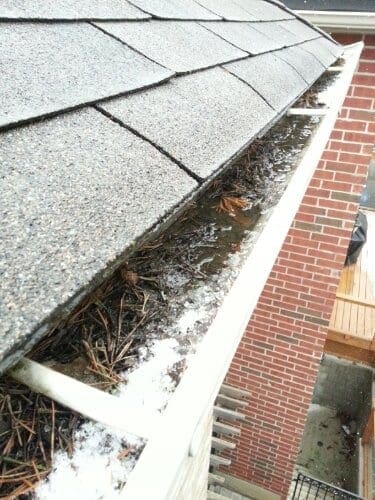
Common fixes: Reseal corners, re-slope low spots, add hangers, replace crushed sections, or upsize outlets. Not sure what you’re seeing? Try our quick repair guide.
How Much Do Eavestroughs Cost in Ontario?
Prices vary by location, material and scope. The following are Maxima Aluminum’s October 2026 planning ranges for typical full-home seamless aluminum replacement projects in Mississauga and the West GTA. They exclude HST and are not province-wide fixed prices.
| System | Installed gutter range per linear foot | Typical full-home project |
|---|---|---|
| 5-inch seamless aluminum K-style | $8–$13 | $2,200–$3,400 |
| 6-inch seamless aluminum K-style | $13–$17 | $2,800–$4,600 |
The full-home ranges assume about 200–250 linear feet and a typical gutter and downspout layout. The per-foot rate is a starting point for gutter runs, not an all-in price. Corners, downspouts, removal, height, access, fascia repairs and optional guards affect the final total.
Small repairs, short sections and partial replacements are quoted separately and are subject to a $300 minimum service call, before HST. Other materials and custom profiles require their own quote.
Use our eavestrough replacement cost calculator to enter roofline footage, corners, downspouts and optional upgrades. We confirm measurements and scope before providing a written estimate.
When to Repair vs. Replace Your Eavestroughs
- Repair if the system is mostly sound and issues are local (one leaking corner, a bit of sag, one crushed section).
- Replace if seams are failing throughout, the layout is wrong (outlets in bad spots), or the gutters are undersized for the roof.
Need help deciding? We install and repair eavestroughs, downspouts, soffit, and fascia across the West GTA.
Frequently Asked Questions About Eavestroughs
How often should I clean gutters in the GTA?
Twice a year (spring and fall). More often if you have mature trees or pine needles nearby.
5″ vs 6″—what size should I pick?
The choice depends on roof area, pitch, runoff, gutter runs and outlet capacity. A larger profile may help where the existing system cannot handle the flow, but blocked outlets or poor slope also need addressing. See our 5-inch vs 6-inch guide.
Do gutter guards really work?
Yes—when matched to the site. Guards reduce clogging and cleaning, but you’ll still want an occasional inspection to clear fine debris at outlets.
Do you serve my area?
We serve Mississauga, Oakville, Brampton, Milton, Burlington, Georgetown, Vaughan, Etobicoke, North York and Caledon. Check our service areas.
What is the difference between eavestrough and gutter?
For house drainage, the terms usually mean the same roof-edge channel. “Eavestrough” is common in Ontario, and “gutter” is also used. Downspouts are the pipes carrying water down from that channel.
How long do aluminum eavestroughs last in Ontario?
Service life varies with installation, maintenance, exposure and damage. Check for repeated leaks, sagging, holes, loose fasteners and damaged fascia rather than replacing a system on age alone.
What causes eavestroughs to pull away from the house?
Eavestroughs pull away when the fascia board behind them is rotted, when hangers are spaced too far apart, or when hangers are fastened into siding rather than structural framing. Ice damming during Ontario winters can also force eavestroughs away from the fascia.
How do I know if my eavestroughs need replacing?
Repeated leaks across several runs, holes, widespread damage or an unsuitable drainage layout may justify replacement. Overflow alone can come from a blockage or poor slope and may be repairable. Compare the condition, repair scope and expected result with a full replacement quote.
What are the best eavestrough materials for Ontario winters?
Seamless aluminum is a common residential choice because it is lightweight, corrosion-resistant and formed on site. Straight runs have fewer joints than sectional gutters, but corners and outlets still need proper sealing. Other materials may suit particular budgets or architectural details.
Do I need a permit to replace eavestroughs in Ontario?
Confirm requirements with your municipality for the work you plan. Ask about structural changes, heritage restrictions and any change to the downspout discharge route. Our Mississauga gutters and drainage article links to local information.
Need help with your system? We install, repair, and replace seamless aluminum gutters with proper slope, outlets, and hanger spacing. Get a quick, written estimate: