


Originally published 2010. Reviewed and updated: — content refreshed with current Mississauga stormwater program guidance, updated pricing, and correct disconnection procedure.
Downspout Disconnection in Mississauga
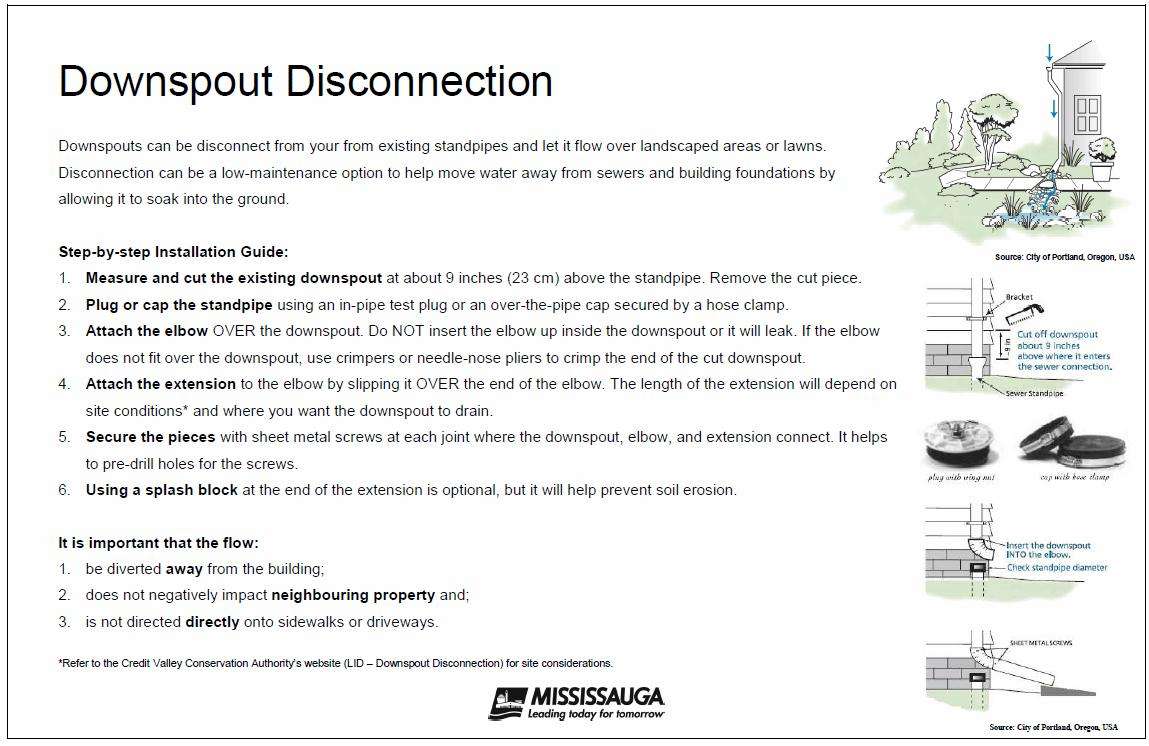
Downspout disconnection is the practice of redirecting roof rainwater away from the city storm sewer and onto your own lawn, garden, or rain barrel. In Mississauga, this reduces the load on the stormwater system during heavy rain and lowers the risk of basement backups on your street.
Why Mississauga Homeowners Do This
Older Mississauga neighbourhoods still have downspouts piped directly into the municipal storm sewer. In a heavy rainfall event, that combined load overwhelms the system and pushes water back into basements and low-lying yards. The City of Mississauga encourages property owners to disconnect downspouts as part of its stormwater management program. See the Mississauga property standards bylaw for current rules.
Two direct benefits for the homeowner:
- Lower basement flood risk during summer storms and spring thaw.
- Less standing water at the foundation, which means less winter ice at the front step and less soil erosion in flower beds.
Where the Water Should Go
Direct the outlet at least 6 feet away from your foundation and away from your neighbour’s property, driveway, and any walking surface. Good release points:
- Onto lawn or garden that slopes away from the house.
- Into a rain barrel for reuse on the garden.
- Over a permeable surface (gravel bed, splash pad) that lets water soak in.
Avoid discharging onto driveways, sidewalks, or areas where water can pool and freeze in winter.
Typical Cost
Basic downspout redirection in Mississauga usually costs $250–$350 per downspout, depending on the number of elbows and extensions needed and whether an underground clay standpipe has to be capped. Adding a rain barrel or splash pad increases the cost. Some homeowners may qualify for a City of Mississauga stormwater credit — check the City’s stormwater charge program for the current details.
DIY or Call a Contractor?
A basic redirect on an above-ground downspout can be a DIY project:
- Cut the downspout above the standpipe connection with a hacksaw.
- Cap or plug the standpipe. This is the step that matters — it stops sewer water from backing up into the pipe.
- Add an elbow and extension to route water at least 6 feet away.
- Anchor with brackets and test with a garden hose.
Call a contractor when the standpipe is buried below grade, the run needs to cross a walkway, or you want a rain barrel or splash pad installed at the same time. Maxima Aluminum handles downspout disconnection as part of full eavestrough or downspout service — see downspout installation and repair.
Bottom Line
Disconnecting your downspouts is one of the lowest-cost things a Mississauga homeowner can do to reduce basement flood risk. It also helps take load off a stormwater system that was not designed for the rain volumes the GTA gets today. If you are already replacing eavestroughs or downspouts, ask your installer to disconnect at the same time — it is usually a small add-on to work already being done.