


Signs Your Eavestroughs Need Replacing Instead of Repairing
Knowing when to replace your eavestroughs or gutters is not always obvious. Missing sections, crushed gutters, or major leaks are easy to notice, but many problems develop slowly over time. Small leaks, poor slope, loose hangers, and blocked outlets can go unnoticed until water starts overflowing, staining fascia, or pooling around the foundation.
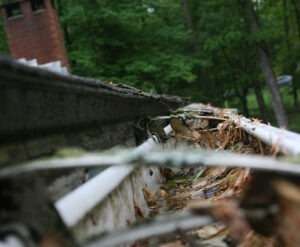
Some eavestrough issues can be repaired. Others are signs that the system is too old, undersized, poorly sloped, or patched in too many places to keep repairing. Here are the most common signs that replacement may be the better long-term option.
1. Cracks, Holes, Rust, or Visible Damage
Visible cracks, holes, rust spots, split corners, or damaged seams are signs that your eavestrough system is no longer performing properly. A single leaking corner may be repairable, but repeated leaks across several areas usually mean the system is near the end of its useful life.
Older sectional gutters are especially prone to joint failure. If the same areas keep leaking after sealant repairs, full replacement with seamless aluminum eavestroughs may be a better solution.
2. Frequent Clogs Even After Cleaning
If your eavestroughs clog shortly after cleaning, the issue may be more than leaves and debris. Frequent blockages can be caused by poor slope, undersized outlets, too few downspouts, or long roof runs that move more water than the existing system can handle.
Homes with mature trees may benefit from gutter guards, but gutter guards are not a cure for a poorly designed or damaged eavestrough system. If the gutters are already sagging, leaking, or undersized, replacement should be considered before adding leaf protection.
3. Sagging or Pulling Away from the Fascia
Eavestroughs that sag, tilt forward, or pull away from the fascia are a clear warning sign. This can happen because of loose hangers, ice load, accumulated debris, improper fastening, or old fascia boards behind the gutter line.
A small loose section may be repairable. But if multiple runs are sagging or pulling away, replacement is often the better option because the slope, fastening, and drainage layout can be corrected at the same time.
4. Water Overflowing During Rain
Overflow during heavy rain can happen for several reasons: blocked outlets, poor slope, undersized gutters, too few downspouts, or roof areas that discharge too much water into one run.
If your eavestroughs overflow even after cleaning, the system may need to be redesigned. Larger 6″ K-style eavestroughs, larger outlets, extra downspouts, or 3×4″ downspouts may be recommended depending on the roof layout.
For more detail, see our guide: 5 inch vs 6 inch eavestroughs for GTA homes.
5. Peeling Paint, Staining, or Soft Fascia
Peeling paint, dark staining, or soft wood behind the gutter line can indicate that water has been leaking or overflowing for some time. This is common when old eavestroughs leak at corners, hold standing water, or pull away from the fascia.
If fascia damage is visible, the eavestrough system should be inspected carefully. In some cases, fascia repair or replacement may be needed before new gutters are installed.
6. Water Pooling Around the Foundation
Eavestroughs and downspouts should help move roof water away from the home where possible. If water is pooling near the foundation, walkway, driveway edge, garden bed, or basement wall, the issue may be related to poor downspout placement, short extensions, blocked outlets, or undersized gutters.
New eavestroughs alone do not fix every grading or foundation issue, but a properly sized gutter and downspout system can help manage roof runoff more effectively.
7. Downspouts Are Too Small or Poorly Located
Downspouts are just as important as the eavestroughs. Long roof runs with too few outlets can overflow even if the gutters are clean. Older homes often have smaller 2×3″ downspouts where larger 3×4″ downspouts would perform better.
During replacement, we often review whether extra outlets, larger downspouts, or longer extensions are needed to improve drainage around the home.
Learn more about downspout installation and repair.
8. The Gutters Are Old, Patched, or No Longer Matching
Many older eavestrough systems have been repaired several times over the years. You may see mismatched colours, patched corners, extra sealant, loose brackets, or uneven sections. At some point, continued repair becomes poor value.
If the system is old, sagging, leaking in multiple places, or no longer matches the rest of the exterior, replacement may give a cleaner and more reliable result.
9. You Are Updating Siding, Soffit, or Fascia
If you are planning new siding, soffit, or fascia, it often makes sense to review the eavestrough system at the same time. Old gutters can look worn beside new exterior finishes, and removing or reinstalling gutters later can add extra labour.
A full exterior refresh is also a good time to coordinate colour, downspout placement, gutter size, and gutter guard options.
Repair or Replace: How to Decide
Repair may be suitable when the issue is small, isolated, and the rest of the system is still in good condition.
- One leaking corner
- One loose downspout
- A short damaged section
- A blocked outlet
- A minor slope issue in one area
Replacement may be better when the system has larger or repeated problems.
- Several leaking corners or seams
- Sagging runs
- Overflow after cleaning
- Undersized gutters or downspouts
- Visible fascia damage
- Multiple patches from previous repairs
- Old gutters that no longer match the exterior
Benefits of New Eavestroughs
New eavestroughs can improve both performance and appearance. A properly installed system helps manage roof runoff, improves drainage layout, and gives the roofline a cleaner finished look.
Modern seamless aluminum eavestroughs are formed on site to fit the home’s roof lengths. They can be installed in 5″ or 6″ K-style profiles, paired with properly sized downspouts, and finished in colours that better match the soffit, fascia, siding, or cladding.
Should You Add Gutter Guards?
If your home has mature trees nearby, gutter guards may help reduce debris buildup and lower cleaning frequency. Maxima Aluminum LTD installs Alu-Rex gutter guard systems on qualifying eavestrough projects.
Gutter guards do not make gutters completely maintenance-free, and they should not be used to cover up a failing gutter system. If your eavestroughs are already loose, sagging, leaking, or undersized, replacement should be reviewed first.
Read more: gutter guards pros and cons.
Get an Eavestrough Replacement Estimate
If you are not sure whether your eavestroughs need repair or replacement, Maxima Aluminum LTD can review the visible condition, roof layout, downspouts, slope, and drainage concerns before recommending the next step.
We provide eavestrough installation, repair, and replacement in Mississauga, Oakville, Burlington, Brampton, Milton, Vaughan, Etobicoke, North York, Caledon, and Georgetown.
Call 416-677-8191 for Mississauga, Oakville, Milton, Burlington, and Georgetown.
Call 416-875-6366 for Brampton, Caledon, Vaughan, North York, and Etobicoke.
You can also request an estimate online or use our eavestrough cost calculator for a rough planning estimate.